Parga Wedding Guide: Say “I Do” on Panagia Island & Beyond
Thinking about a destination wedding in Parga? This coastal town on the Epirus mainland offers island views, colourful houses, a romantic harbour and the iconic chapel on Panagia Island – all in one compact, walkable setting. This guide walks you through venues, ceremony options, costs, best months and practical planning tips.
- Perfect for: couples who want an intimate, scenic wedding by the Ionian Sea
- Ceremony types: Orthodox chapel weddings, civil ceremonies, symbolic blessings
- Highlight: tiny chapel and viewpoints on Panagia Island opposite Parga town
- Typical group size: from elopements & micro–weddings up to 80–100 guests
- Best months: May–June & September for good weather and softer crowds
- Budget range: from simple, low–key celebrations up to full planner‑led events
Jump to:
- Why choose Parga for your destination wedding
- Wedding ceremony types in Parga & Panagia Island
- Top wedding locations & venues in and around Parga
- Typical costs & what affects your budget
- Best months and weather for a Parga wedding
- How to get to Parga for your wedding
- Step‑by‑step planning tips
- Parga wedding FAQ
A wedding in Parga is more than a ceremony – it’s a full experience of local food, Ionian sunsets and relaxed Greek hospitality. Below you’ll find everything you need to decide if it’s the right place for your “I do”.
1. Why choose Parga for your destination wedding
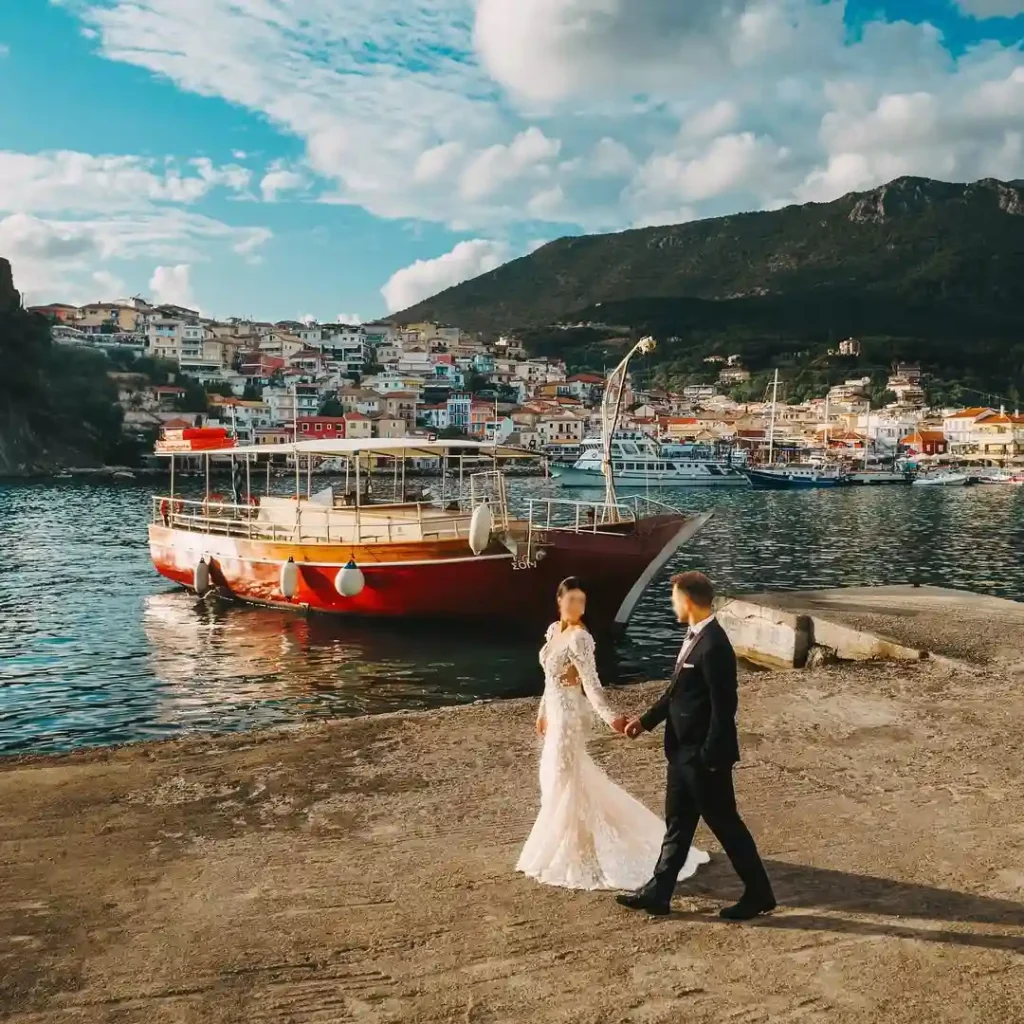
Parga has the feel of a small island town, even though it sits on the mainland: colourful houses climb the hill up to the Venetian castle, boats bob in the harbour and the tiny island of Panagia sits just offshore with its white chapel and greenery. It’s compact, walkable and instantly photogenic – ideal for wedding photos without long transfers.
Couples also love that guests can combine the wedding with a proper holiday: days on Valtos or Lichnos Beach, boat trips along the coast, and excursions to Acheron River or nearby villages. Because Parga is not as overbuilt as some islands, it still feels authentic and relaxed, with tavernas, cafés and small alleys to explore together.
2. Wedding ceremony types in Parga & Panagia Island
In and around Parga you can usually choose between three main types of ceremony. The exact options depend on your nationality, religion and how formal you want the paperwork to be.
- Orthodox church wedding: for couples who meet the Greek Orthodox Church requirements, it is possible to have a full religious ceremony in a local church or chapel, often with the sea as a backdrop. This is the most traditional option for Greek and some international couples.
- Civil ceremony: legally–binding civil weddings are usually performed by the local municipality. Many couples handle the paperwork at home or at the town hall and then have a symbolic blessing or celebration at a more scenic spot in Parga.
- Symbolic blessing: the most flexible option for destination weddings. You can exchange vows on Panagia Island, on a hotel terrace, on the beach or in a private villa garden, with no legal restrictions on timing or format. The legal marriage can be done in your home country before or after the trip.
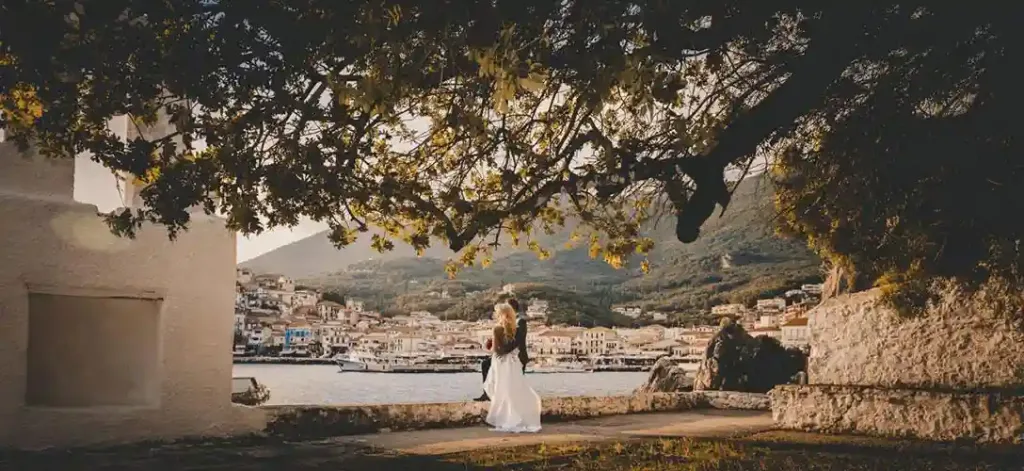
Panagia Island is especially popular for symbolic ceremonies and photoshoots: you can arrive by boat, walk up to the small chapel and enjoy views back towards Parga, the castle and the coastline.
3. Top wedding locations & venues in and around Parga
Parga does not have huge “wedding factories” – most venues are small to medium size, which suits intimate celebrations. Here are the main styles of locations couples choose.
- Panagia Island chapel & viewpoints: ideal for symbolic ceremonies, vow renewals and photos. You get the feeling of a private island with direct harbour views, yet you are just a few minutes from town by boat.
- Beachfront resorts: several resorts around Valtos and Lichnos Bay offer wedding packages with on‑site chapels or terraces overlooking the sea, plus accommodation for guests and reception spaces by the pool or on the sand.
- Boutique hotels & villas: smaller hotels or private villas with sea views are perfect for micro–weddings or elopements, where you can host the entire group in one place and have a relaxed garden or terrace reception.
- Cliffside and castle‑view terraces: venues in and around the old town and castle area provide spectacular views over Parga, Panagia and the Ionian, especially at sunset.
- Traditional tavernas: for a more informal celebration, some couples choose a favourite taverna overlooking the harbour or beach, with local food, live music and dancing into the night.
A good local planner or venue coordinator can help you match the right location to your guest numbers, budget and preferred style – formal, boho, minimalist, classic Greek or something in between.
4. Typical costs & what affects your budget
Wedding budgets in Parga vary widely, from simple elopements with just the couple present to full–scale celebrations with many guests. Instead of a fixed price, it’s more useful to think about the main elements that shape your total cost.
- Guest count: this is usually the single biggest factor. Catering, drinks and seating scale directly with the number of people you invite.
- Venue type: a private villa or premium resort terrace will cost more than a simple taverna reception or small bar by the harbour.
- Planning & coordination: many destination couples choose a local planner or on‑site coordinator to handle suppliers, paperwork and timelines, which adds a fee but removes a lot of stress.
- Extras: live band or DJ, flowers and décor, professional photography and video, boat transfers to Panagia, fireworks and additional events like welcome drinks or next‑day brunches will all increase the budget.
A simple, low–key celebration with a small group and minimal extras can stay relatively affordable, while a fully curated destination wedding with several events, professional decor and entertainment will naturally sit at a higher price point. When you speak with venues or planners, it helps to share a realistic budget range from the beginning so they can suggest matching options.
5. Best months and weather for a Parga wedding
Parga has a classic Ionian climate: warm, sunny summers and milder shoulder seasons. For weddings, many couples prefer:
- May & June: long days, comfortable temperatures, everything is green and fresh from spring, and the town is lively without being packed.
- September: still warm for swimming, often with calmer winds and softer light, plus fewer crowds than high summer.
July and August offer the hottest weather and the liveliest atmosphere, but also higher prices, busier venues and more competition for dates. If you dream of a midday outdoor ceremony in peak summer, consider shade, hydration and lighter outfits; many couples in these months choose late afternoon or sunset timings instead.
6. How to get to Parga for your wedding
One of Parga’s advantages is that, although it feels like an island, it is reachable by road as well as by air and sea. Guests can arrive in several ways:
- By plane: the nearest airports are Aktion (PVK) near Preveza and Ioannina (IOA). In summer, there are seasonal international flights to PVK plus domestic connections from Athens and other hubs. From either airport, Parga is typically 1–1.5 hours by car or transfer.
- By ferry: for guests driving from Italy or Western Europe, ferries arrive in Igoumenitsa, from where the drive down the coast to Parga is roughly one hour.
- By car or bus: Parga is connected by road to Preveza, Ioannina and other towns in Epirus, making it accessible for Greek guests travelling overland.
In your invitations or wedding website, it’s worth including a short “How to get here” section with your preferred airports, transfer recommendations and approximate travel times.
7. Step‑by‑step planning tips
To keep things simple, you can use this rough sequence when planning a wedding in Parga:
- Decide your guest list and ideal season (month and day of the week).
- Set a realistic budget range and decide which elements matter most to you (view, food, music, photos).
- Shortlist venues and planners that match your style and group size; arrange video calls if you can’t visit in person.
- Confirm ceremony type (Orthodox, civil, symbolic) and where the legal part will take place.
- Lock in key suppliers: venue, planner or coordinator, catering, photographer, entertainment and any boat transfers to Panagia.
- Share clear travel info with guests – airports, transfer options, where to stay in Parga and any group activities around the wedding day.
- Plan one or two simple extras: a casual welcome drink in the harbour or a relaxed beach day can make the whole experience feel like a shared mini‑holiday.
8. Parga wedding FAQ
- Is Parga suitable for small, intimate weddings?
Yes – most venues in and around Parga are naturally sized for elopements and small to medium‑sized groups, rather than very large banquets, which makes it ideal for couples who want a relaxed, personal celebration. - Can we have our ceremony on Panagia Island?
Many couples use Panagia for symbolic ceremonies, vow renewals or photoshoots. Access is by boat from Parga harbour, and timings depend on sea conditions and any arrangements with your planner or boat operator. - How far in advance should we book?
For popular summer weekends and sunset time slots, it’s wise to start planning 12–18 months ahead, especially if you want a specific venue or chapel. For weekday or shoulder‑season dates, there is often more flexibility. - Do we need a local wedding planner in Parga?
It is possible to organise a simple celebration directly with a venue, but most international couples find a local planner or coordinator extremely helpful for handling suppliers, translation, paperwork and “on the day” logistics. - What can our guests do around the wedding day?
Guests can enjoy beach days at Valtos or Lichnos, boat trips along the coast, evenings in the harbour, visits to the castle and trips to places like the Acheron River or nearby villages – turning your wedding into a small holiday for everyone.